
Plane Booster
Kolka GamesRacing
4.514.00 Reviews
- Version
- 1.0.3
- Installs
- 50.00K
- Age Rating
- Everyone
Screenshots
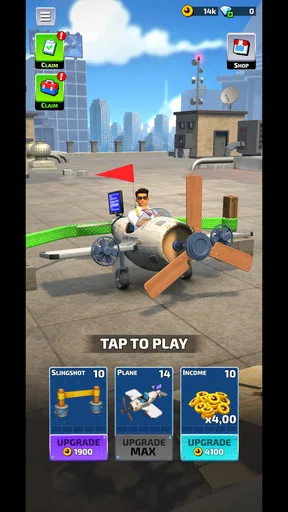
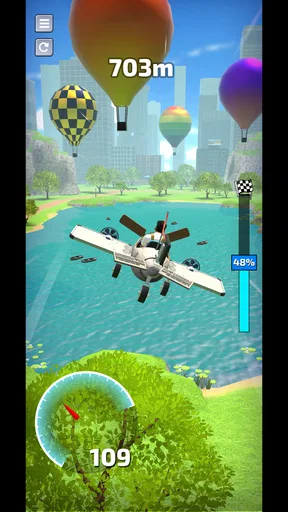
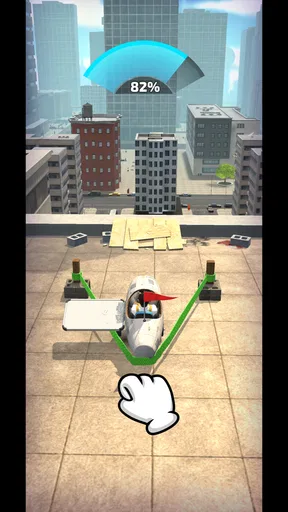
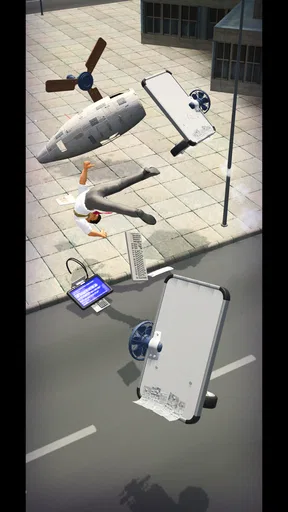
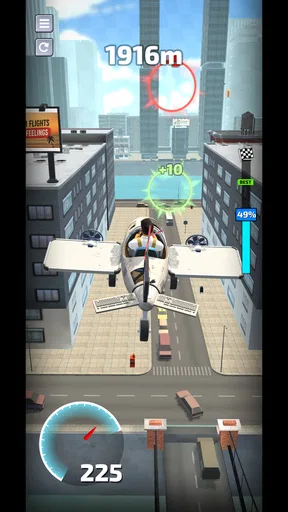
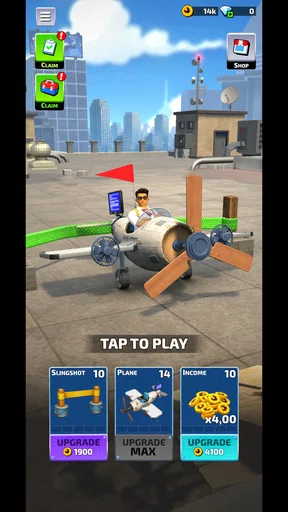
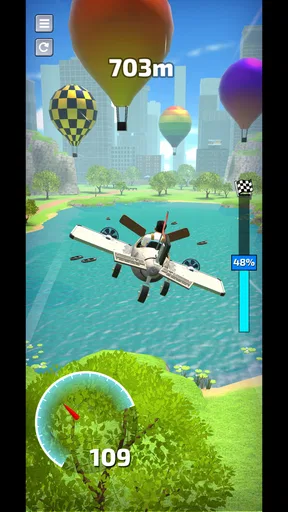
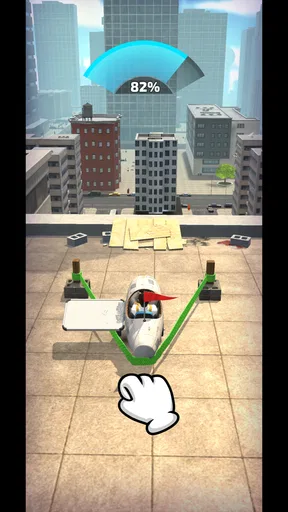
Our Review of Plane Booster
 Analysis by Appyee
Plane Booster is a free racing game from Kolka Games that turns the idea of flying into a distance-and-upgrade challenge. Instead of presenting itself as a traditional flight simulator, it is built around a much simpler question: how far can I push the plane, and which improvements make the next attempt worthwhile? I found that focus useful because it makes the game easy to understand within a short session, while still giving each run a reason to continue.
The game is aimed at Everyone, so it is an approachable choice for younger players and adults who want something uncomplicated. It has an average rating of 4.5 from around 949 ratings, with over 50K installs, which suggests that its basic loop has found an audience. The current version is 1.0.3, and the game was released on Jul 20, 2026. Those details matter mainly because this feels like a focused, relatively early experience rather than a huge racing platform with years of accumulated systems.
What to consider before choosing Plane Booster
My first decision criterion would be the kind of racing experience you want. If you expect licensed aircraft, realistic controls, detailed airports, or competitive head-to-head races, this is probably the wrong direction. Plane Booster is better understood as a light arcade game about repeated attempts, gradual improvement, and the satisfaction of beating your previous distance.
That distinction changes how I judge it. I do not approach each session looking for simulation accuracy. I look for a quick control response, a clear reason to upgrade, and enough variation in each attempt to stop the loop from feeling automatic. For a casual game, those are more important than a long list of aircraft or technical flight options.
The second criterion is how much patience you have for progression. A game built around flying farther naturally asks you to repeat attempts. The question is whether those attempts feel like meaningful practice or merely a wait between upgrades. I would recommend trying it when you enjoy small improvements and short goals. I would skip it if repeating a similar launch or flight pattern quickly becomes boring for you.
The third criterion is spending comfort. The game is free to download, but its in-app purchases range from $1.89 to $54.99 per item. I would treat those purchases as optional conveniences rather than part of the basic decision to install. Before spending, I would play enough to understand whether the core loop itself is enjoyable. If the first few sessions do not feel satisfying without payment, buying an upgrade is unlikely to solve the underlying problem.
How the basic loop works for everyday play
In practical terms, I see Plane Booster fitting into the gaps of an ordinary day. Imagine waiting for a bus, taking a short break between tasks, or sitting down for ten minutes before bed. A distance-focused racing game is a good match for those moments because the objective is immediately readable: start a run, manage the attempt, and try to improve the result.
The useful habit is to give each run a specific purpose. One attempt can be about learning the opening section, another about testing whether an upgrade improves consistency, and a third about pushing for a personal best. That approach makes repetition feel less empty. It also prevents the common mistake of spending resources on every available improvement without learning which change actually helps your play.
I would also avoid judging the game after one awkward attempt. In this kind of design, early runs are often valuable because they show where the current setup struggles. If the plane falls short, I would first ask whether the problem came from control, timing, or insufficient progression. That small pause makes the game more strategic than simply tapping to restart.
Where this game has the clearest advantage
The strongest part of Plane Booster is its narrow purpose. It does not need to teach a complicated aviation vocabulary before letting me play. The store summary describes the goal as flying farther and upgrading smarter, and that idea comes through as a compact arcade structure rather than a demanding simulation. Its best quality is the low barrier between opening the game and understanding what I am trying to achieve.
That makes it more inviting than many conventional racing games for players who do not want a full career mode. A car racer may ask me to learn tracks, braking points, vehicle classes, and race formats. A flight simulator may expect patience with controls and procedures. Plane Booster is more suitable when I want the feeling of progression without committing to a large system of rules.
I also like the way the upgrade idea can give failed attempts a useful after-effect. A run that does not reach a new distance can still teach me something about the next improvement to pursue. The important trade-off is to upgrade with a plan. If I simply choose whatever looks available, the progression can become a checklist. If I connect each improvement to a problem I noticed during play, the same system feels more rewarding.
Another advantage is its age rating. Because it is rated Everyone, it is easier to recommend for shared casual play in a family setting. I would still explain the purchase options to a child and keep spending under adult control, but the content rating itself makes the game less intimidating than a racing title built around mature themes or aggressive competition.
Three practical ways to get more from each attempt
My first tip is to separate learning runs from record attempts. During a learning run, I would pay attention to the plane’s behavior and the moments where progress starts to slow. I would not waste the attempt chasing a perfect result. Once I understand the pattern, I would use the next run to test one change at a time. This gives upgrades a clear purpose and makes it easier to tell whether progress came from better decisions or simply a lucky attempt.
My second tip is to avoid spending immediately after a disappointing flight. A weak result can come from poor timing rather than a weak plane. I would play another attempt before committing resources, especially if the failure happened early. This is a small but important trade-off: saving for a meaningful improvement may produce a larger benefit than making several minor purchases that do not change how the run feels.
My third tip is to use short sessions deliberately. Rather than playing until the loop feels repetitive, I would stop after a small group of focused attempts and return later. That works particularly well for a game whose central reward is going farther. A brief break can make the next session feel like a fresh challenge instead of another identical chore.
These are not complicated techniques, but they address the main risk of a distance-based game: turning every run into an automatic restart. Plane Booster is more enjoyable when I treat it as a series of small experiments. The game becomes less about blindly chasing a number and more about understanding which choice helps the next flight.
How it compares with the usual racing alternatives
Compared with a traditional car racing game, Plane Booster is likely to appeal more to someone who prefers progression over direct competition. A standard racer usually gives me a track, opponents, and a finish line. Here, the attraction is the attempt itself and the gradual push toward a greater distance. That makes it less suitable for players who need overtaking, lap strategy, or a strong sense of race-day drama.
Compared with a flight simulator, it offers a more accessible starting point. I would not choose it to practice real aviation concepts or to enjoy detailed aircraft handling. I would choose it when I want an aviation-themed game without the mental load of a simulator. The benefit is convenience; the cost is that players seeking realism may find the experience too streamlined.
Compared with endless-runner games, the upgrade focus gives Plane Booster a different rhythm. An endless runner often emphasizes reflexes and immediate obstacle avoidance. Plane Booster’s appeal is more connected to improving the setup and extending the next attempt. If you enjoy watching a character react to hazards every second, another category may feel more active. If you prefer seeing gradual progress from one run to the next, this game has the better fit.
There is also a difference between Plane Booster and large racing games that offer extensive customization. Bigger alternatives may provide more content, but they can also demand more storage, attention, and time. I would choose this game when I want a single clear objective. I would choose a broader racing title when variety, collecting, multiplayer competition, or detailed vehicle identity matters more than a clean progression loop.
Where another option may suit you better
I would not recommend Plane Booster to someone who wants a realistic cockpit experience. The game’s appeal is its simplicity, so it should not be judged as a substitute for a simulator. If your enjoyment comes from adjusting technical settings, following procedures, or learning authentic flight behavior, look for a game designed around those priorities instead.
I would also be cautious if you need constant novelty. A focused distance-and-upgrade structure can be satisfying, but it may feel narrow beside a racing game with several event types. Players who want a new track, vehicle, or rule set in every session may run out of curiosity sooner than players who enjoy refining one repeatable challenge.
Competitive players should think about what motivates them. Plane Booster can provide a personal improvement target, but that is not the same as racing against visible opponents or coordinating with a team. If your favorite moment in a racing game is overtaking another player at the finish, a multiplayer-oriented alternative will probably create stronger excitement.
There is a similar issue with players who dislike in-app purchase prompts in free games. The purchase range, from $1.89 to $54.99 per item, means I would approach the game with a clear budget and avoid treating payment as a solution to every slow point in progression. The free entry is useful for testing the experience, but it does not automatically make the game a perfect fit for someone who prefers a one-time purchase with no optional spending.
What switching costs look like in practice
The cost of switching to Plane Booster is mainly about changing expectations. If I normally play detailed racing games, I need to accept that the reward here is not a realistic vehicle model or a dramatic championship. It is the small satisfaction of making the next attempt travel farther. Once I understand that, the game feels more focused rather than limited.
There is also a time cost in learning how to read the progression. Because the game’s value comes from repeated improvement, I need to give it enough attempts to see whether the upgrade choices genuinely affect my decisions. I would not install it for a single five-minute test and immediately make a final judgment. At the same time, I would not force myself through a long session if the repeated loop already feels dull.
The financial switching cost is easy to control if I delay purchases. Since the game is free, I can evaluate the basic experience first. My advice is to decide on a personal rule before buying anything: either remain fully free-to-play, or spend only after confirming that the game’s central loop is enjoyable on its own. That keeps the decision focused on entertainment rather than on trying to justify an earlier purchase.
Device compatibility is another practical point. The listed minimum operating system is version 12, so I would check that requirement before expecting to install it on an older phone or tablet. For a newer device, the more relevant question is whether the game’s compact format matches the way you use your phone. It is not a good reason to choose it if you are specifically looking for a technically demanding showcase.
Who I would recommend it to
I would recommend Plane Booster to casual players who like short racing sessions, visible progression, and a clear personal target. It is especially suitable for someone who enjoys trying again after a near miss, testing an improvement, and gradually extending a run. The Everyone rating also makes it a reasonable option for a broad family audience, provided an adult handles purchase decisions.
I would recommend it less strongly to expert racing fans, simulator enthusiasts, and players who need a deep multiplayer scene. Those audiences may find the focused design too modest. I would also hesitate to suggest it to anyone who becomes frustrated by repetition, because the game’s central appeal depends on being willing to repeat the basic challenge while making smarter choices.
The developer, Kolka Games, has kept the identity straightforward: this is a Plane Booster experience, not an attempt to cover every form of aviation or racing. That focus is a strength when I want something immediately understandable. It becomes a limitation when I want a broad collection of modes and long-term variety.
My final recommendation is to try the free version with a specific test in mind. Play enough attempts to decide whether the act of improving distance feels satisfying before considering any in-app purchase. If you enjoy turning each run into a small experiment, Plane Booster is an easy game to keep nearby for short breaks. If you need realistic flight, direct competition, or constant new content, choose a different racing category instead.
Overall, I see Plane Booster as a compact arcade racer with a clear audience. It succeeds when simplicity, repeatable goals, and gradual upgrades are exactly what I want. It does not need to replace a simulator or a full racing game; its value is that it gives me a lighter alternative. For me, that makes it worth trying, with the important condition that I judge the free core loop first and keep spending separate from the decision to enjoy it.
Verdict
Strengths of Plane Booster
- Simple controls make it easy for beginners to start playing.
- Short sessions are convenient for quick breaks or commutes.
- Aircraft upgrades add a sense of progression over time.
- Bright visuals make the game easy to follow on small screens.
- Offline play may be useful when Wi-Fi or mobile data is unavailable.
Limitations of Plane Booster
- Gameplay can become repetitive after extended play sessions.
- Some upgrades may require considerable time or repeated play.
- Frequent ads can interrupt the flow for free users.
- Limited aircraft variety may reduce long-term appeal.
- Performance can vary on older or less powerful devices.
Similar Picks in This Category
View All
Hill Climb Racing
Fingersoft4.3

Dr. Driving
SUD Inc.4.2

Traffic Rider
skgames4.5

Asphalt 8 - Car Racing Game
Gameloft SE4.6

Race Master 3D: Car Racing
Beresnev Games4.6

Extreme Car Driving Simulator
AxesInMotion Racing4.3
Frequently Asked Questions
What is Plane Booster and how does it work?
Plane Booster is an aviation-themed mobile game focused on improving and expanding your aircraft operation. After installing it, players typically manage available resources, upgrade planes or facilities, and complete objectives to progress. Its gameplay combines simple management mechanics with short interactive tasks, making it suitable for casual sessions. The exact features and progression system may vary depending on the version available for Android or iOS.
Is Plane Booster free to download and play?
Plane Booster can generally be downloaded for free, although the game may include optional in-app purchases. These purchases can provide extra currency, speed up upgrades, unlock content, or offer other gameplay advantages. You do not necessarily need to spend money to begin playing, but progression may feel slower without optional purchases. Before downloading, check the store listing for current pricing, supported devices, and any purchase-related information.
Does Plane Booster require an internet connection?
Whether Plane Booster works fully offline depends on the version and the features being used. Basic gameplay may be available without a constant connection, but advertisements, cloud synchronization, updates, rewards, leaderboards, or account-related functions may require internet access. If you plan to play while traveling, test the game after disabling mobile data and Wi-Fi. Also remember that offline progress may not synchronize until you reconnect.
Is Plane Booster suitable for children?
Plane Booster may be easy for younger players to understand because its controls and objectives are generally designed for casual mobile gaming. However, parents should review the age rating, advertising practices, privacy policy, and in-app purchase settings before allowing children to play. If the game includes online features or external links, parental controls are recommended. Restricting purchases through the device settings can help prevent accidental transactions.
What devices are compatible with Plane Booster?
Compatibility depends on the specific release of Plane Booster and the operating system installed on your device. Before downloading, check the official Google Play Store or Apple App Store page for the minimum Android or iOS version, required storage, and supported device models. Keeping your operating system updated can improve stability, but older phones may experience slower loading, reduced graphics quality, or occasional performance issues.
Play our best games!


